
Graffiti on brickwork or stone creates an immediate concern: can you remove the paint without harming the surface beneath it? That matters whether you are responsible for a commercial building, a boundary wall or older masonry with a delicate finish.
The reassuring answer is that graffiti can often be removed without damaging sound masonry, provided the cleaning method suits the surface. Dry ice blasting offers a controlled approach, but good results start with assessing the brick, stone and mortar rather than treating every wall in the same way.
What can cause damage during graffiti removal?
Damage usually occurs when the cleaning action is too aggressive for the material, or when existing weakness goes unnoticed. Brick and stone may feel hard, yet their exposed surfaces can be softer or more weathered than expected. Mortar joints may also be more vulnerable than the surrounding masonry.
Excessive pressure, unsuitable abrasive media or harsh scraping can remove surface material as well as paint. On some bricks, damaging the fired outer face can leave the material beneath more exposed to moisture. Stone can lose texture, tooling marks or fine detail if cleaning cuts into its surface.
Chemical products also need careful selection. An unsuitable product or incomplete rinsing can leave residues, staining or changes in appearance. Simply applying more product is not a reliable answer to stubborn graffiti.
The aim is to remove the unwanted coating, not a layer of the wall. A suitable approach considers the paint, the condition of the substrate and the finish that needs to be preserved. Existing cracks, loose joints and flaking areas should be identified before cleaning begins.
How dry ice blasting removes graffiti
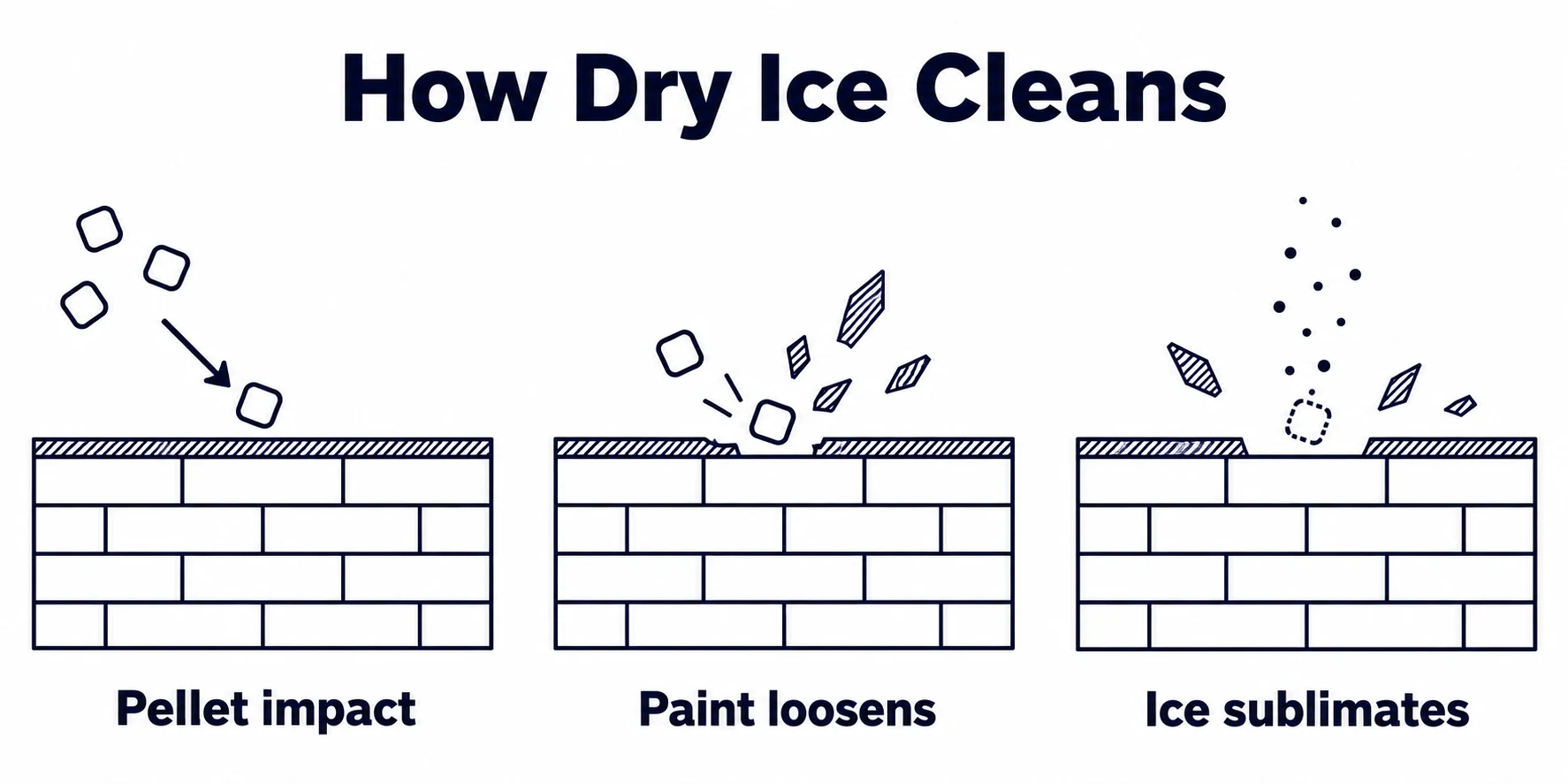
Dry ice blasting uses compressed air to propel solid carbon dioxide pellets towards a surface. Their impact and rapid cooling help loosen the unwanted coating. As the dry ice changes directly from a solid into a gas, it leaves no spent blasting media behind.
Unlike conventional abrasive blasting, the process does not rely on hard mineral grit to scour the masonry. It also introduces no cleaning water. These characteristics make dry ice brick cleaning worth considering where preserving the underlying surface and avoiding additional moisture are important.
The process is adjustable. Air pressure, pellet delivery, nozzle choice, working distance and the time spent on one area all influence the cleaning action. A competent operator uses those controls to find an effective setting for the particular surface.
Dry ice blasting is not automatically suitable for every coating or every wall. Fragile masonry and poorly bonded finishes can still be affected by impact or temperature change. Our brickwork and graffiti cleaning service considers the condition of the surface before selecting the cleaning approach.
Why the brick, stone and mortar need checking first
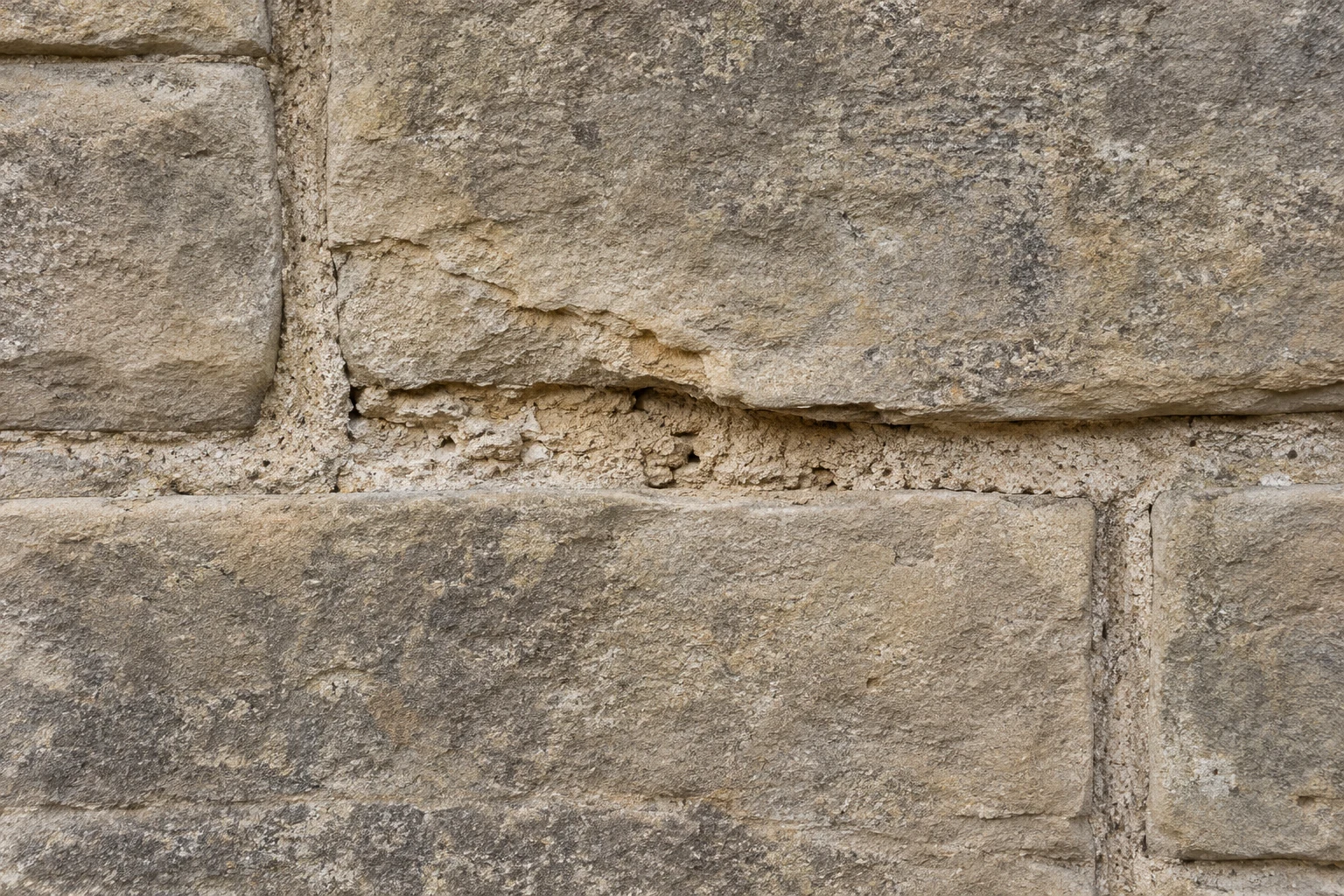
Two walls with similar graffiti can respond differently to cleaning. Dense masonry may hold much of the coating near the surface, while porous brick or stone can allow paint to penetrate more deeply. The type of paint and any previous treatments also affect how readily it releases.
A useful assessment looks at several things together:
- Surface condition: crumbling brick, flaking stone or loose grains may indicate that repairs or specialist advice are needed first.
- Mortar joints: soft, recessed or deteriorating joints need particular care.
- Existing finishes: paint, sealers and protective coatings may react differently from bare masonry.
- Architectural detail: carvings, lettering and original surface textures need to be preserved.
A small trial in a discreet, representative area helps establish how both the graffiti and the substrate respond. The result should be checked for paint removal, changes in texture and disturbance to joints before proceeding.
For listed buildings or masonry with historic significance, check whether consent or conservation advice is needed. A test patch supports that decision, but does not replace any necessary approval.
Can every trace of graffiti be removed safely?
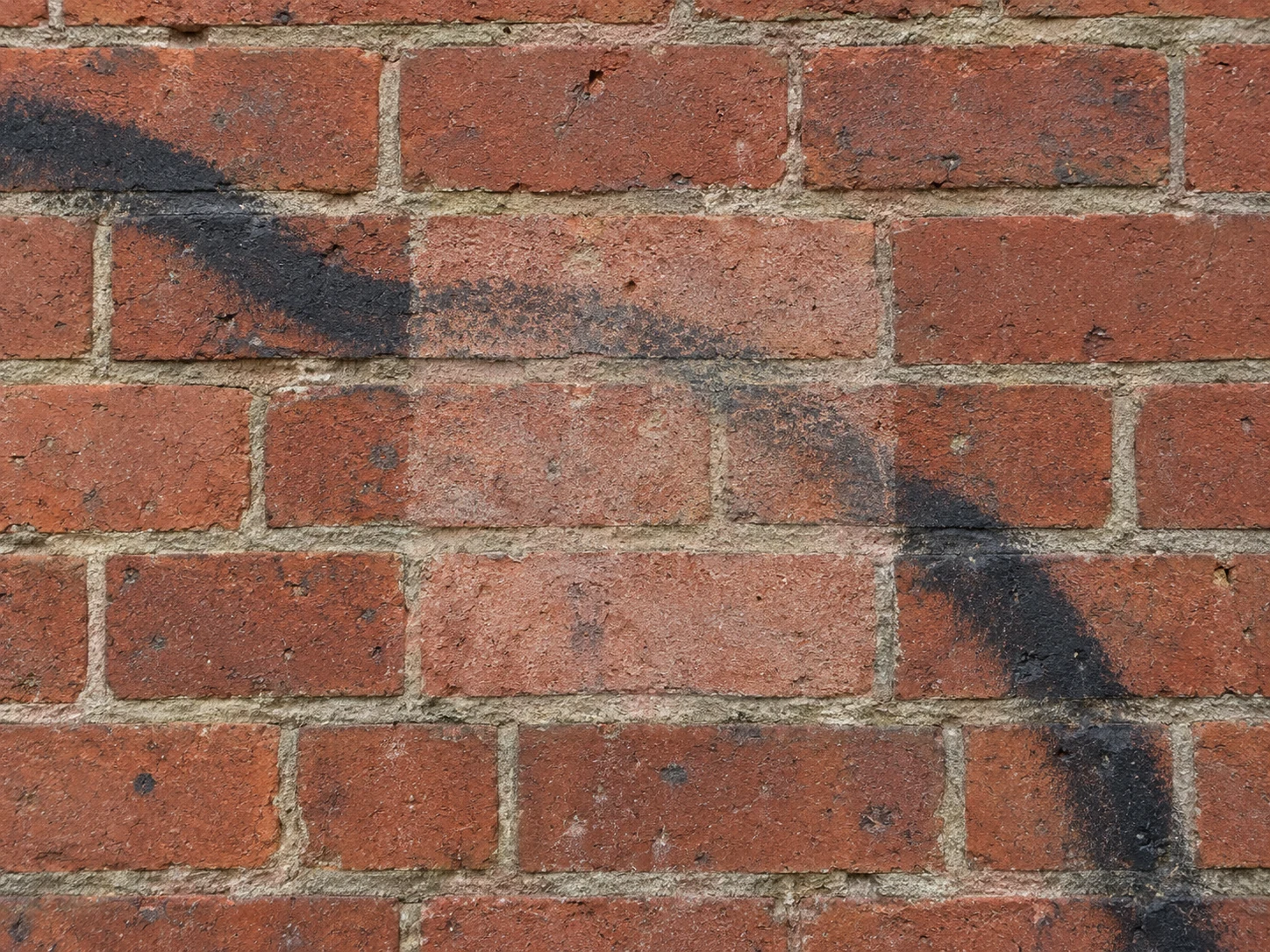
Sometimes the main paint layer releases cleanly but a faint residual stain remains. This is often called ghosting. It can happen when pigment has entered the pores rather than remaining entirely on the surface.
A remaining mark does not necessarily mean the cleaning needs more force. Increasing intensity to chase deeply embedded pigment can put the masonry at risk. The sensible next step is to reassess the residue and consider whether a compatible follow up treatment would help.
It is also worth distinguishing staining from a difference in cleanliness. Removing graffiti can uncover masonry that looks different from adjacent areas carrying accumulated dirt. Planning the cleaning boundaries helps avoid an unnecessarily patchy result without treating more of the building than needed.
Agreeing the intended finish after a trial gives everyone a realistic reference point. For an example of our work, explore our graffiti removal project. The right approach for your property will still depend on its own materials, condition and coating.
Choosing a controlled cleaning approach
Dry ice blasting is a useful option, but the best method is the one that removes the graffiti while respecting the substrate. DOFF cleaning uses superheated water delivered at controlled low pressure and may be suitable for certain coatings and masonry surfaces. It requires assessment and testing too.
In some situations, a carefully selected graffiti remover may help soften paint before an appropriate cleaning or rinsing stage. Product compatibility, dwell time and residue management matter. Avoid experimenting with household solvents or hiring powerful pressure washing equipment before the wall has been assessed.
Before work begins, ask how the contractor will test the surface, protect neighbouring materials and manage the removed paint. Dry ice disappears as gas, but the dislodged coating still needs containment and collection. Ventilation and suitable safety controls are essential because carbon dioxide must not be allowed to accumulate.
Photographs of the affected area, details of previous treatments and information about the building material can help with an initial discussion. A closer inspection or trial may then be needed to confirm the approach.
- Graffiti removal need not damage sound masonry when the method suits the surface.
- Dry ice blasting offers adjustable cleaning without hard mineral grit or added water.
- Brick, stone and mortar should be assessed together before work starts.
- A test patch helps establish safe settings and a realistic finish.
- Deep pigment staining needs reassessment, not simply more cleaning force.
Frequently asked questions
Is dry ice blasting safe for old brickwork?
It can be suitable where the brick and mortar are sound. Age alone does not determine suitability. Weathering, loose material and previous repairs all matter, so an assessment and representative test patch should come first.
Will graffiti removal change the texture of stone?
Correctly selected cleaning should aim to preserve the existing texture. Soft or deteriorating stone needs particular care. A trial helps reveal whether the treatment affects surface grains, tooling marks or fine detail.
Does dry ice blasting leave anything to clean up?
The dry ice turns into gas, so it leaves no spent blasting media. Removed paint and other contamination remain, however, and need suitable containment, collection and disposal.
Should I try removing the graffiti myself first?
Avoid scrubbing, scraping or applying an unknown solvent, especially on porous or older masonry. These actions can spread pigment or damage the surface. Record what has happened and seek advice before attempting treatment.
Get advice before treating your masonry
If you are concerned about protecting brickwork or stone, speak to Eco Dry Ice Blasting. Share details of the surface and graffiti, and we can help you understand the next steps towards a suitable cleaning approach.