
Water is essential to many food factory cleaning routines, but it is not suitable for every task. Around moisture sensitive equipment or areas where drainage is limited, introducing water can create extra work before production can restart.
Dry ice cleaning offers a useful alternative for removing suitable deposits without adding wash water or chemical cleaning agents. The important distinction is that the dry ice disappears, but the dirt does not. Effective cleaning still needs careful preparation, residue collection and checks against your site’s hygiene requirements.
How dry ice cleaning removes food processing residues
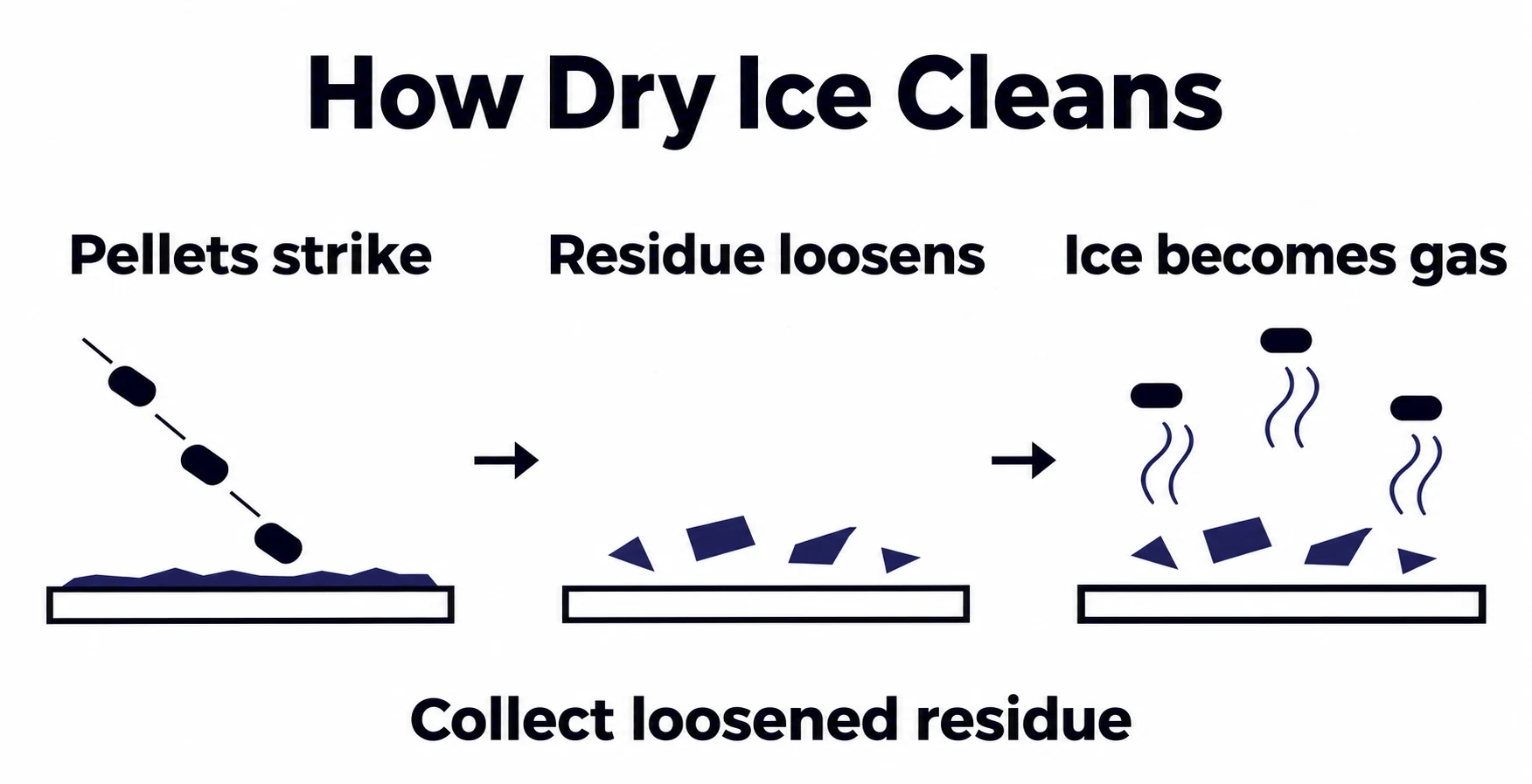
Dry ice cleaning uses compressed air to propel pellets of solid carbon dioxide towards a surface. The impact and rapid cooling help loosen deposits. As the dry ice warms, it changes directly from a solid into a gas, a process called sublimation.
Unlike washing, the process does not introduce liquid water. Unlike blasting with persistent media, it does not leave spent abrasive behind for collection. This makes it particularly useful when the cleaning medium itself would otherwise add to the waste handling task.
Potential applications include removing grease, baked food deposits and accumulated production residues from suitable equipment. The result depends on the deposit, its thickness, the underlying material and access to the affected surface. A controlled trial can help establish the right approach before a larger clean.
Our dry ice cleaning for food processing equipment addresses these practical needs, including residue removal where water and chemical waste streams are operational concerns. The method should be selected for the particular cleaning task, rather than assumed suitable for every surface.
What cleaning without water runoff actually means
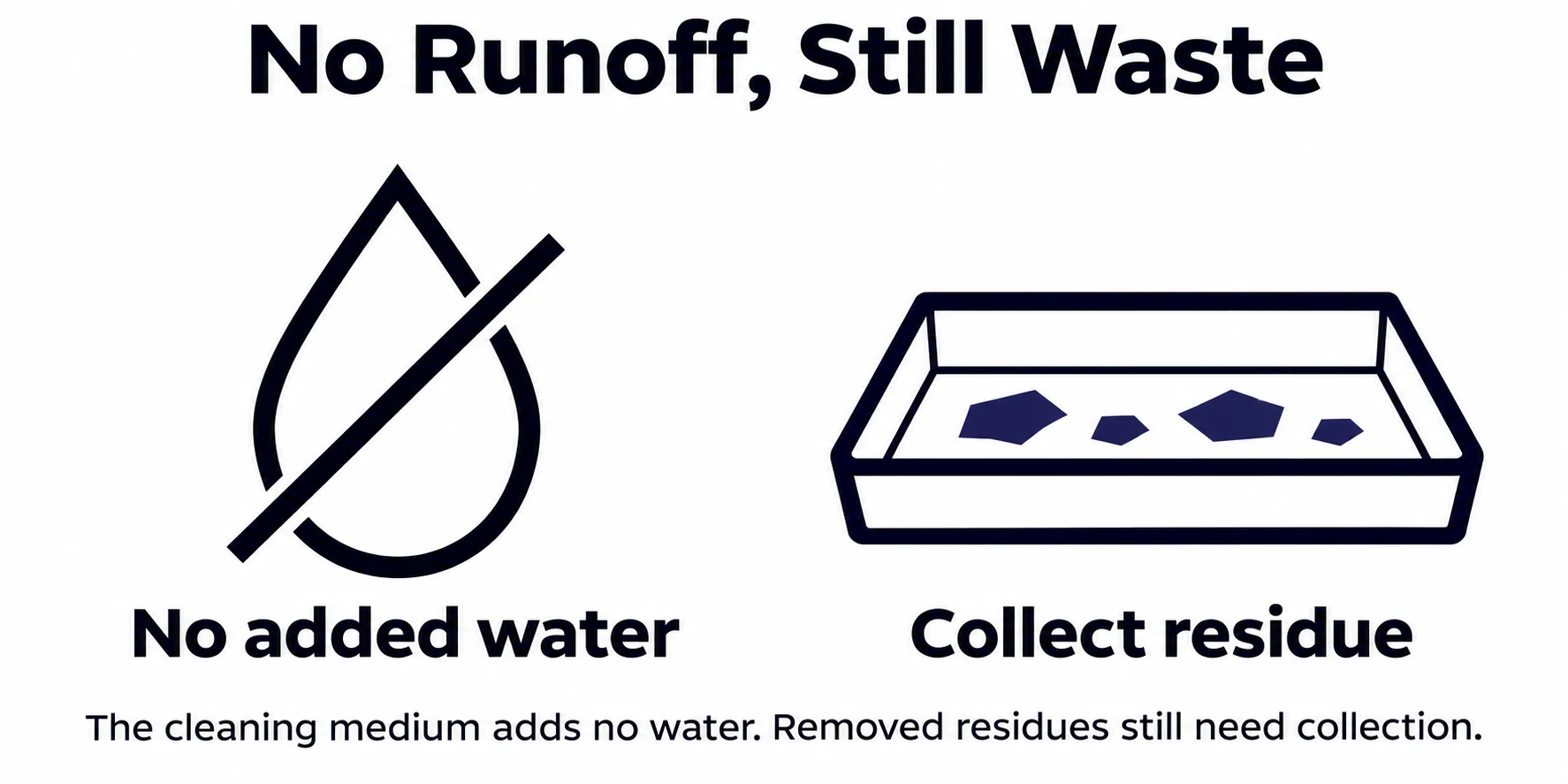
With dry ice blasting, there is no wash water carrying loosened material towards a drain. That can simplify planning around equipment bases, production lines and areas where liquid must be contained. It also avoids introducing a wet cleaning stage solely to remove suitable deposits.
However, no water runoff does not mean no waste. Removed food residue, grease and other contamination must still be captured and disposed of appropriately. Depending on the task, collection may involve suitable extraction, vacuum equipment or protective containment around the working area.
The process itself does not require chemical cleaning agents, so it does not generate a chemical wash solution. Existing contamination still determines how collected waste should be handled. Any separate detergent or disinfection stage remains part of the wider hygiene procedure.
Dry ice also does not guarantee that condensation cannot occur. Cooling a surface below the surrounding air’s dew point can allow moisture to form. Site conditions and surface temperatures therefore matter, particularly around sensitive components.
Where dry ice cleaning fits around production equipment
The strongest candidates are often tasks where deposits are accessible but water would complicate the cleaning process. Examples may include suitable conveyor components, oven parts, processing machinery and equipment exteriors. Each application needs an assessment of materials, condition and hygiene requirements.
Dry ice cleaning can reduce disassembly when the nozzle can reach deposits without removing large sections of machinery. This can help maintenance teams target contamination while keeping the scope of the shutdown focused.
Access still matters. Blasting cannot reliably clean hidden surfaces simply because they sit within the same machine. Guards may need to be removed safely, and enclosed channels, overlapping parts or inaccessible product contact areas may require another method.
- Check the deposit and the material beneath it.
- Identify sensitive seals, coatings, bearings and electrical components.
- Confirm nozzle access and a route for collecting loosened residue.
- Agree which parts need dismantling or protection before work begins.
Where a shutdown also includes surrounding machinery, industrial equipment cleaning can be considered alongside the production equipment task, with appropriate separation between hygiene zones.
Keeping food safety at the centre of the cleaning plan
Removing visible deposits is valuable, but it is not the same as demonstrating that equipment is hygienically ready for production. Dry ice cleaning should sit within the site’s food safety procedures, including its hazard analysis and critical control point system, commonly called HACCP.
Do not treat dry ice blasting as automatic disinfection or sterilisation. Where a validated sanitising stage is required, it must remain in place unless an approved assessment supports a change. Product contact surfaces need particular attention before release back to production.
Allergen control also requires a defined procedure. Loosened material must not transfer from one machine, product area or hygiene zone to another. Removing exposed food and packaging, establishing containment and agreeing the cleaning sequence help control that risk.
After cleaning, use the inspection and verification methods specified by your hygiene team. These might include visual checks and appropriate residue, allergen or microbiological testing. The acceptance criteria should be agreed before work starts, so everyone understands what a successful clean must achieve.
Preparing for a safe and effective clean
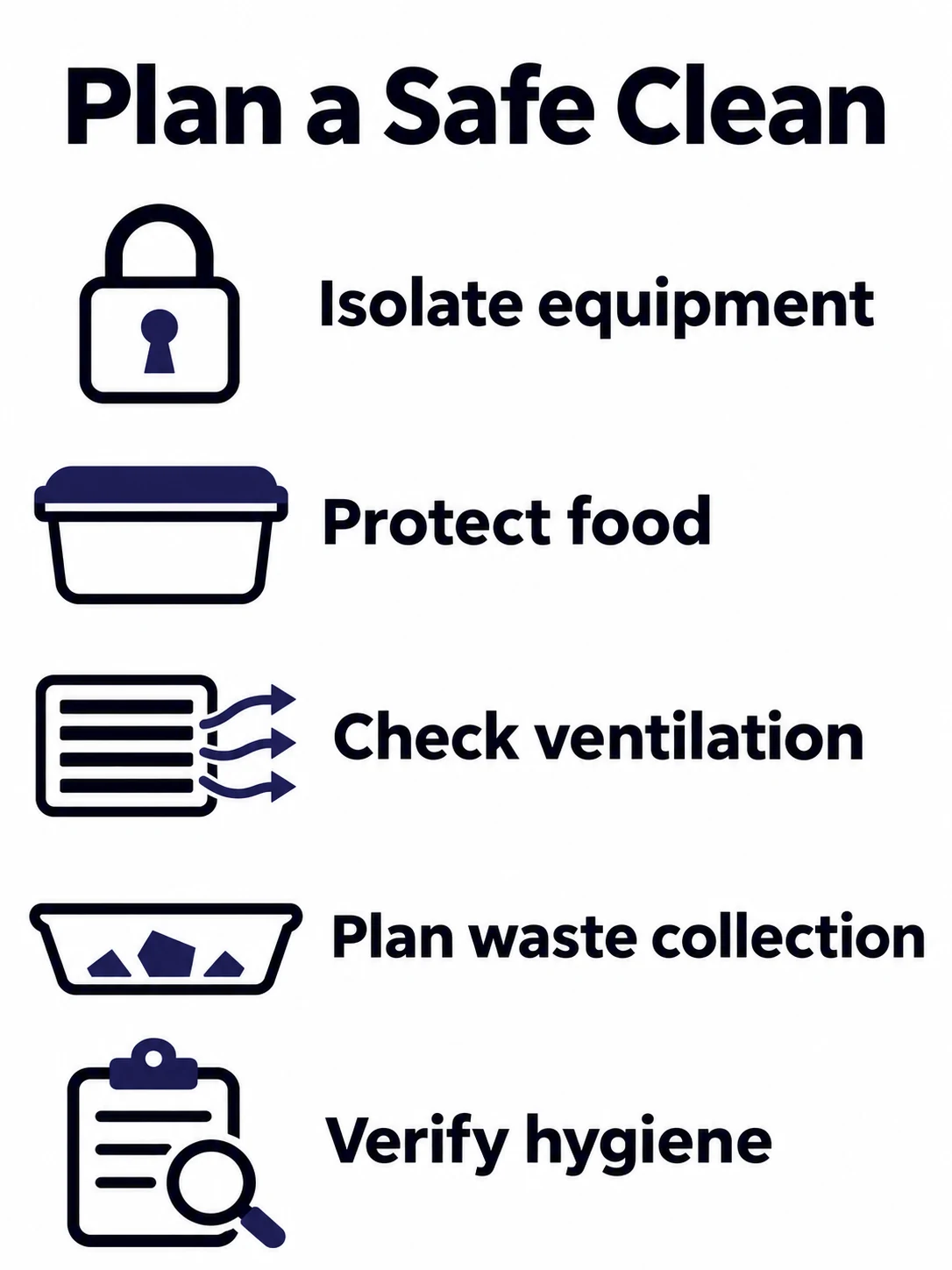
A useful initial assessment covers the equipment, the residue and the surrounding production environment. Share material specifications where available, explain previous cleaning difficulties and identify the areas that must remain protected.
Agree the following with the cleaning team before the planned shutdown:
- Isolation and access. Machinery must be safely shut down and isolated, with guards and access arrangements handled under site procedures.
- Ventilation and monitoring. Dry ice releases carbon dioxide gas. The risk assessment should establish ventilation and any atmospheric monitoring needed, especially in enclosed or poorly ventilated spaces.
- Containment and collection. Protect nearby equipment and remove exposed ingredients, food and packaging from the affected area.
- Operating controls. Set suitable blasting parameters and provide the required protection against noise, cold contact and projected debris.
- Hygiene release. Allocate responsibility for residue collection, inspection, any further sanitation and authorisation to restart.
The compressed air supply and dry ice handling arrangements should also suit the hygiene environment. A trial on a representative area can confirm deposit removal and surface compatibility, helping the team plan the full clean with confidence.
- Dry ice cleaning removes suitable deposits without introducing wash water or chemical cleaning agents.
- The dry ice becomes gas, but removed contamination still needs controlled collection.
- Accessible equipment may need less disassembly, subject to safe access and surface compatibility.
- Ventilation, hygiene verification and any required sanitation remain essential.
Frequently asked questions
Can dry ice cleaning replace all wet cleaning?
No. It is useful for particular deposits and equipment, especially where added moisture is undesirable. Other tasks may still need washing, rinsing or sanitising. Your hygiene team should decide how each method fits into the validated cleaning programme.
Can dry ice blasting be used near electrical equipment?
It may be suitable for some applications, but moisture sensitivity alone does not establish suitability. Electrical equipment needs appropriate isolation, protection and an assessment of component condition, blasting exposure and possible condensation. Manufacturer guidance should inform the cleaning plan.
Does the equipment need to be dismantled?
Not always. Accessible deposits can sometimes be removed with less disassembly than other methods require. Hidden surfaces and enclosed parts still need proper access, and guards must be managed safely. The assessment should identify exactly what needs removing.
What happens to the food residue after blasting?
It separates from the surface and remains as material to collect. Containment and suitable extraction or vacuum equipment help prevent it spreading. The collection method should reflect the residue, any allergen risks and the hygiene requirements of the surrounding area.
Find the right approach for your equipment
Tell Eco Dry Ice Blasting about your equipment, residues and hygiene requirements. We can help assess where dry ice cleaning could support your cleaning programme without introducing water runoff.